
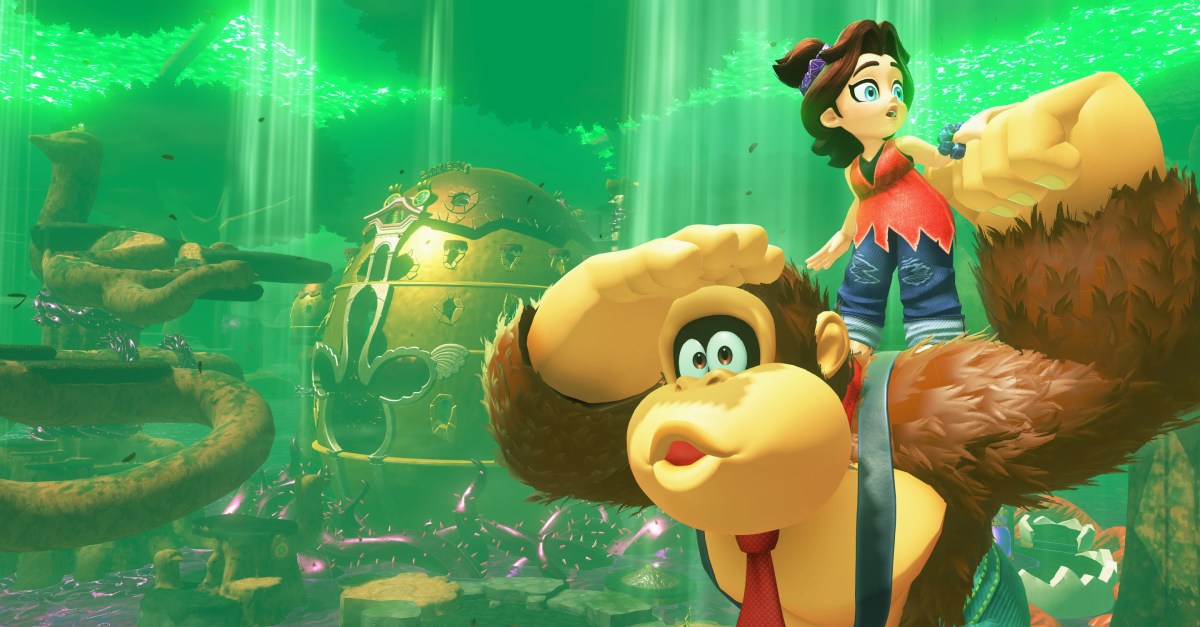
Donkey Kong Bananza has boldly claimed its place as the first 3D Nintendo platformer to make waves after The Legend of Zelda: Breath of the Wild, even managing to outshine the beloved Super Mario Odyssey in sales. This title continues the trend of Zelda stepping boldly into the limelight, setting the standard for what the Switch can deliver. It not only reshapes expectations for the series but also redefines the fundamental design principles we’ve come to associate with Nintendo games.
Crafted by the team behind Super Mario Odyssey and led by director Kenta Motokura, Bananza quickly reveals that its creators are not afraid to challenge norms. After a few hours of gameplay, which brought me to the second main area, it’s evident that the developers embraced many ideas from the Zelda team, all while balancing the unique flavor of a Donkey Kong title.
The most exciting aspect of Donkey Kong Bananza is its character-driven design—Nintendo has meticulously understood who Donkey Kong is and translated that essence into gameplay. For the first time in two decades, a Donkey Kong game has been crafted in-house at Nintendo Japan, resulting in an exuberant showcase of destruction. Donkey Kong bulldozes through the game world, obliterating walls and shaking the ground beneath him. Every element reinforces his brute strength and endearing, straightforward personality, from the simple dialogue to the satisfaction of menu buttons smashing apart with a delightful thwack. It’s a thrilling new vibe for Nintendo, combining chaos, recklessness, and pure fun.
However, Bananza isn’t just about mindless mayhem; it introduces a level of sophistication borne from Nintendo’s evolution. Following in the footsteps of Breath of the Wild, the game isn’t shy about complexity. Donkey Kong boasts a diverse moveset with a detailed control scheme that players may need to get accustomed to, though all moves are accessible right from the start—an approach that celebrates player freedom in tackling challenges.
In the spirit of the recent Zelda titles, Bananza allows for unprecedented freedom of movement, enabling players to scale nearly any surface, a daring choice for a platformer. This exploration is further enhanced by DK’s destructive capabilities, providing a wealth of options for uncovering secrets. Importantly, while playing through the main path, the focus on impact often takes precedence over pure player-driven solutions. For example, specific punches and slams fit together like keys in locks, creating dynamic interactions with the environment.
Despite its new mechanics, Bananza retains some of the traditional structure of platform games. Players still unlock transformations, like the powerful Kong Bananza, and navigate through subterranean Layers leading to the core of the planet. While these layers are open for exploration, they feel more compact and contained, reminiscent of Odyssey’s unique locales compared to the expansiveness of Zelda’s world.
As I journeyed through Bananza, I couldn’t help but notice many subtle nods to the last two Zelda titles—from DK’s heart meter, enhanced with temporary yellow hearts after a hearty rest, to collectibles resembling outfits that boost stats. Donkey Kong glides between layers and surfs on floating debris in his adventures, mirroring Link’s stylized movements. To my surprise, the game also features a skill tree, a mechanic Nintendo typically steers clear of, rewarding players with skill points for every five giant, crystal bananas collected. While this is a nice touch, the catchy tune celebrating each banana pick-up—echoing a joyous “Oh, Banana!”—is the real incentive.
In Donkey Kong Bananza, three distinct Nintendos emerge, sometimes at odds and other times harmonizing beautifully. The first reflects the craftsmanship seen in every 3D Mario adventure, filled with delightful secrets and quirky surprises. The second embodies the fresh perspective of Breath of the Wild and Tears of the Kingdom, which champion player freedom and innovative programming alongside traditional craftsmanship. Even if the frame rate struggles to keep pace, it doesn’t overshadow the immense creativity.
 Priyam Gera