
Amid the various greenhouse gases released into our atmosphere by human activities, carbon dioxide stands out as a primary concern. Experts emphasize that our path forward must not only encompass a significant reduction in fossil fuel consumption but also advocate for the active removal of carbon dioxide (CO2) from the atmosphere. Yet, carbon capture technologies often come with hefty price tags and substantial energy demands, in addition to requiring effective carbon storage methods.
Enter a revolutionary idea from researchers at Stanford University: harnessing the power of rocks to help address this urgent issue.
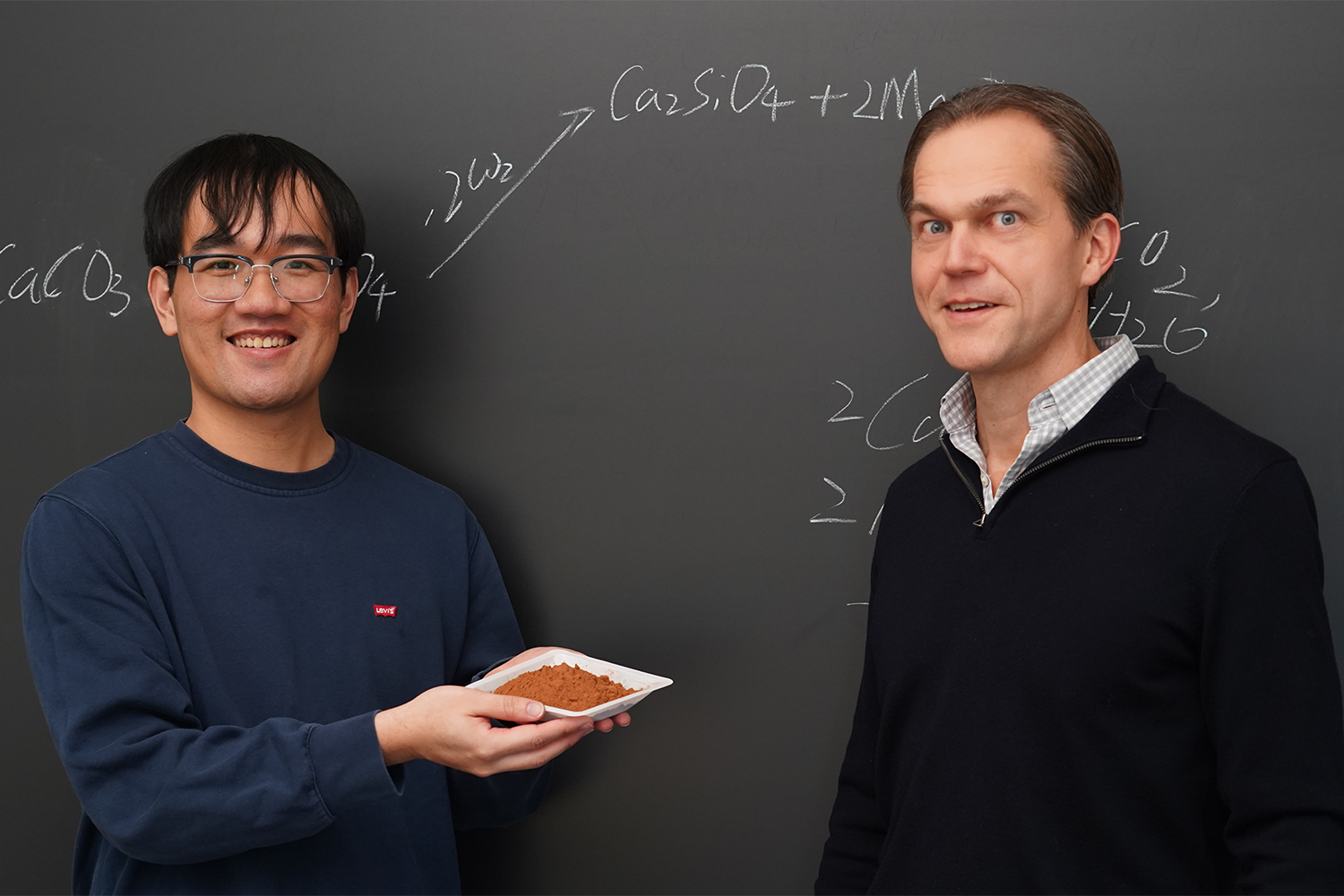
This isn’t just a whimsical notion. Stanford chemists Matthew Kanan and Yuxuan Chen have pioneered a process that leverages heat to convert minerals into materials that can absorb CO2—a solution that is both practical and cost-effective. Their findings, detailed in a recent publication in the journal Nature, suggest that these minerals could also support common agricultural practices, thereby offering a dual benefit.
Kanan, the senior author of the study, expressed the potential of utilizing Earth’s abundant mineral resources, stating, “The Earth has an inexhaustible supply of minerals that are capable of removing CO2 from the atmosphere, but they just don’t react fast enough on their own to counteract human greenhouse gas emissions.” He believes their work addresses this issue in a scalable manner.
For years, scientists have been on a quest to accelerate the natural process of CO2 absorption by certain rocks, known as weathering, which can take centuries or even millennia to occur. Kanan and Chen appear to have deciphered a solution by transforming common slow-weathering minerals, known as silicates, into their faster-reacting counterparts.
Chen elaborated on their innovative approach: “We envisioned a new chemistry to activate the inert [not chemically reactive] silicate minerals through a simple ion-exchange reaction.” Here, ions—charged atoms or groups of atoms—play a crucial role. “We didn’t expect that it would work as well as it does.”
Drawing inspiration from cement production, where limestone is heated in a kiln to produce calcium oxide—a reactive chemical compound—Kanan and Chen adapted this technique. Instead of sand, they introduced magnesium silicate, which contains two minerals that, upon heating, exchanged ions and transformed into magnesium oxide and calcium silicate—two minerals that weather rapidly.
“The process acts as a multiplier,” Kanan noted. “You take one reactive mineral, calcium oxide, and a magnesium silicate that is relatively inert, and you end up generating two reactive minerals.”
To validate their results, Kanan and Chen subjected wet calcium silicate and magnesium oxide to air, and within a few weeks to months, these minerals transformed into carbonate minerals, marking the effects of weathering.
Kanan shared an exciting vision: “You can imagine spreading magnesium oxide and calcium silicate over expansive土地 areas to extract CO2 from the atmosphere.” One promising application they’re currently exploring is incorporating these minerals into agricultural soil. This could prove advantageous for farmers, who typically add calcium carbonate to acidic soil—a practice known as liming.
“By incorporating our product, we could eliminate the need for liming, as both mineral components are alkaline,” Kanan explained. “Moreover, as calcium silicate weathers, it releases silicon into the soil in a plant-available form, potentially enhancing crop yields and resilience. Ideally, farmers would invest in these minerals because of their benefits for soil health and productivity, plus the added bonus of carbon removal.”
A ton of magnesium oxide and calcium silicate has the capacity to absorb an equivalent ton of CO2 from the atmosphere—this estimate already accounts for the CO2 emitted by the kilns, which are nonetheless more energy-efficient than traditional carbon capture technologies.
However, scaling this solution to create a significant impact means we’d require millions of tons of magnesium oxide and calcium silicate every year. Still, Chen mentions that if natural reserves of magnesium silicates like olivine or serpentine are as robust as suggested, they could adequately address the entirety of anthropogenic atmospheric CO2 and beyond. Additionally, these silicates could be extracted from mining waste.
Kanan concluded with optimism: “Society has already figured out how to produce billions of tons of cement annually, and cement kilns have a lengthy operational lifespan. By leveraging existing knowledge and infrastructure, there is a clear pathway for transitioning from laboratory discovery to meaningful carbon removal on a large scale.”
 Priyam Gera