
If you decide to make a purchase through the links provided in our articles, we may earn a commission, which helps support our journalism. For more information, feel free to consider subscribing to WIRED.
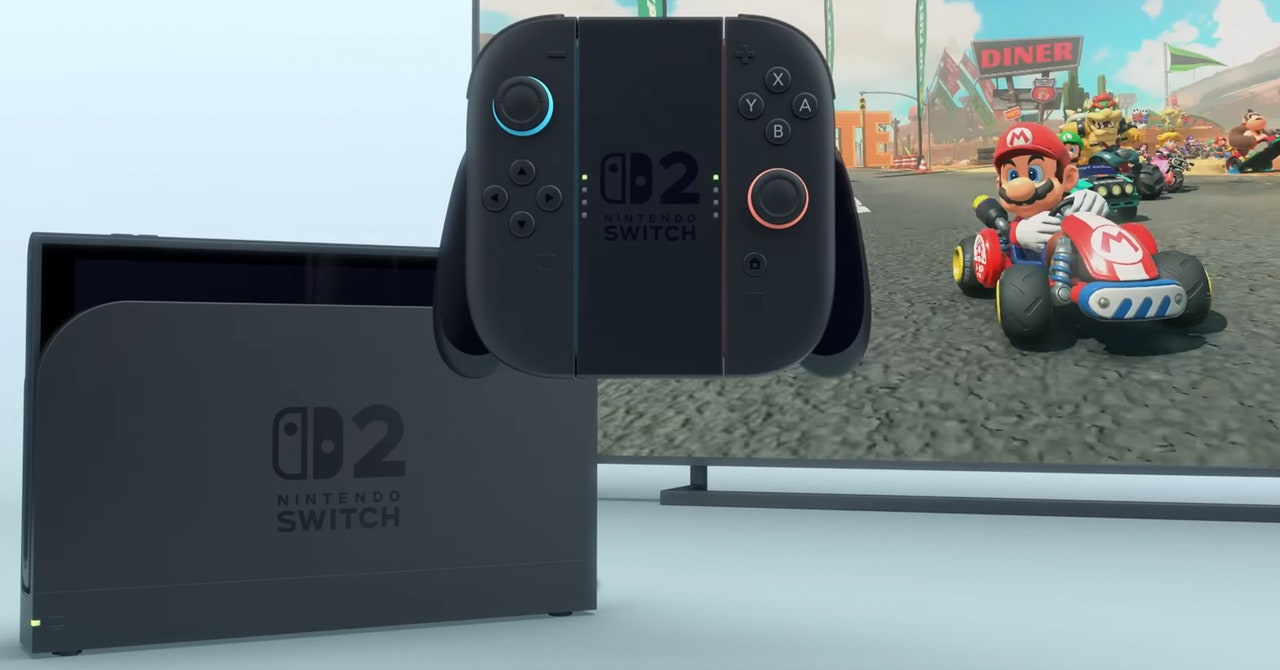
The Nintendo Switch 2 is a topic wrapped in intrigue. Recent teasers have revealed a few snippets of information—a larger overall look, revamped Joy-Con controllers, backward compatibility, and what appears to be the much-anticipated Mario Kart 9 as a possible launch title. Despite these hints, Nintendo has been remarkably silent regarding the specifics of the hardware, services, and how this new console promises to elevate the gaming experience beyond the already immensely popular Switch.
It seems that Nintendo is treading cautiously, but with a Nintendo Direct presentation slated for April 2, enthusiasts are hopeful for more clarity. However, the new console undoubtedly presents opportunities for improvement over its predecessor. Here are five critical elements that the Switch 2 must address to ensure its success.
### Enhanced Online Services
While Nintendo has made strides to improve its online infrastructure—eliminating the confusion between Nintendo Network IDs and Nintendo Accounts—the digital experience still has notable shortcomings.
To start, the eShop’s user interface desperately needs an overhaul. Currently, it’s cluttered, sluggish, and frustrating to browse. Features that should be straightforward, like genre searches, are buried in the search tab, and there’s no straightforward option to sort games alphabetically; users can only navigate by relevance, popularity, release date, or price.
The web browsing experience is even more disappointing—trying to access the eShop via Nintendo.com gives an impression that’s more informational than transactional. Navigate through categories to find games, and you’re met with an interface so outdated that filtering for games available on discontinued platforms like the Nintendo 3DS and Wii U remains an option. Despite the Switch enjoying strong physical sales, a significant 53% of game sales between January and August 2024 were digital, according to industry analyst Mat Piscatella. Therefore, the need for an enhanced discovery and exploration function within Nintendo’s digital storefront is pressing.
Next is Nintendo Switch Online, which serves as Nintendo’s answer to PlayStation Plus and Xbox Game Pass. It unlocks online multiplayer features and offers a curated collection of retro games, spanning the NES, SNES, and Game Boy libraries, with more titles arriving from the N64 and Game Boy Advance as part of the Expansion Pack subscription.
The Switch 2 offers a fantastic opportunity here: it could expand the retro game offerings to include classics from the GameCube era. With rumors suggesting the return of the GameCube controller, Nintendo may be preparing for just that. Additionally, reintroducing the ability to purchase digital versions of past-gen games outright, a feature last seen on the Wii U, would allow Nintendo to rotate selections of games available in NSO, akin to what Sony and Microsoft offer their subscribers, and enable Switch 2 owners to create a multigenerational gaming library.
### Improved Backward Compatibility
It’s no secret that many Switch games face challenges running on eight-year-old hardware. On a technical level, the visuals are seldom groundbreaking, though developers often rely on clever art direction to create captivating environments. Unfortunately, when even some of Nintendo’s flagship titles struggle with frame rates, draw distances, and texture quality—recent releases like Pokémon Sword/Shield and Scarlet/Violet stand out as notable examples—something has to give.
The Switch 2 could alleviate these performance issues if backward compatibility enhances older Switch games. However, this won’t be a simple fix; just as with Sony’s PS5 Pro, which requires specific patches for games to utilize the improved hardware, developers may need to upscale original Switch titles for the new console to truly shine.
This could place responsibility on developers to ensure their games leverage any enhancements offered by Switch 2. However, if approached correctly—taking care to avoid Sony’s early pitfalls—boosting backward compatibility could make Switch 2 the ultimate platform for gamers across two generations.
### Elevated Screen Resolutions
That’s right—resolutions, plural. The existing Switch offers a 1280 x 720-pixel resolution in handheld mode, which can increase to a maximum of 1920 x 1080 when docked and connected to a TV. The Switch 2 needs to step up its game on this front. With competing handheld gaming PCs, such as the Asus ROG Ally X and Lenovo Legion Go offering impressive resolutions of 1080p and even 2560 x 1600, a minimum of 1080p Full HD is essential for handheld gaming.
When docked, the resolution should ideally reach 4K, specifically 3840 x 2160 pixels. If you’ve invested in a new TV over the last decade, it’s likely designed for that resolution—anything less from the Switch 2 would feel dated. While authentic 4K would be ideal—perhaps achievable with additional processing power in the dock—Nintendo’s approach has often diverged from the hard numbers that other brands tout. Hence, upscaled 4K could be a broadly acceptable solution, especially considering the impressive results of the PS4 Pro in this arena.
### Reintroducing Media Applications
The Switch debuted without any media apps, and over time, Nintendo only added a few—like YouTube, Crunchyroll, Hulu in the US, and Niconico in Japan. This was part of Nintendo’s clear strategy to maintain the Switch’s focus as a gaming device. Reggie Fils-Aimé, formerly of Nintendo of America, emphasized in 2017 that the goal was to create a top-tier gaming machine, meaning it was primarily geared toward gameplay.
However, the convenience of accessing streaming services on consoles is undeniable. This isn’t a new concept for Nintendo; the Wii U had a native Netflix app, and the Wii offered a BBC iPlayer app in the UK. Given the growing demand from fans for broader streaming options, the Switch 2 could leverage its larger screen and enhanced capabilities to deliver a more compelling multimedia experience without losing sight of its gaming roots.
### A Strong Lineup of New Games
This is arguably the most crucial aspect. Much of the original Switch’s success arose from the failure of its predecessor, the Wii U. Although over 13 million units sold isn’t insignificant, it pales in comparison to the 101 million Wii owners or the 146 million players who have embraced the Switch. This gap meant many missed out on standout titles like Mario Kart 8, Super Mario 3D World, and Captain Toad: Treasure Tracker, which then found renewed life on the Switch.
That strategy may not be viable for the Switch 2. The well of underappreciated gems is running dry—cult favorites like Xenoblade Chronicles X, The Wonderful 101, and Tokyo Mirage Sessions #FE (a collaboration between Atlus’s Shin Megami Tensei and Nintendo’s Fire Emblem) have already transitioned to the Switch. Other classic titles, like Paper Mario: The Thousand-Year Door and Metroid Prime, have also made their way from GameCube to Switch, the latter notably enhanced as Metroid Prime Remastered. While nostalgic fans continue to call for remasters of classics like The Wind Waker and Twilight Princess, older source materials need significant effort to be remade for modern platforms.
Additionally, backward compatibility with the Switch 2 means less urgency to revisit previous-gen games. Millions of players can still enjoy favorites like Luigi’s Mansion 3 on the new console, making a rerelease seem unnecessary. The Switch 2’s game roster needs to focus on new experiences, a departure from the remaster-heavy strategy adopted previously.
Nintendo certainly has the potential for exciting new projects—while a new Mario Kart is guaranteed, long-awaited franchises like F-Zero haven’t seen a major release since 2003, and beloved titles like Star Fox, Donkey Kong, and Kid Icarus haven’t resurfaced in years. The time is ripe for revival and innovation.
Even more thrilling than resurrecting classic IPs is the opportunity for entirely new gaming adventures. If the next-gen Joy-Con controllers offer mouse-like functionalities, as rumors suggest, the Switch 2 could authentically accommodate a range of genres, from grand strategy to point-and-click, which typically struggle with traditional gamepad controls.
Moreover, with Microsoft indicating support for the console, the potential game library could expand significantly. Although specifics are yet to be announced, titles like Halo: The Master Chief Collection, Diablo 4, and possibly Call of Duty could find their way to the platform, boosting the Switch 2’s allure.
In summary, the Nintendo Switch 2 is set to usher in an era brimming with potential. While there are many areas for improvement and innovation, the future looks bright for Nintendo enthusiasts eagerly anticipating what the next chapter will bring.
 Priyam Gera