
‘Football’s lawmakers are a joke.’
Nestled in the heart of Zurich, wedged between a clothes shop and an accessories store on a quiet side street, lies the headquarters of the International Football Association Board (IFAB), an inconspicuous building that holds immense power in the world of football.
Established in 1886, IFAB possesses the sole jurisdiction over the Laws of the Game, ensuring its decisions reverberate across the globe, leaving an indelible mark on the international football community. The impact of these decisions, however, remains a subject of contention among fans, as evinced by the recent backlash in response to a proposal to introduce ‘blue cards’, which would temporarily remove players from the field for committing cynical fouls or exhibiting dissent towards the referee.
The board of directors of IFAB comprises the chief executives of the four British football associations, namely Mark Bullingham of England, Noel Mooney of Wales, Patrick Nelson of Northern Ireland, and Ian Maxwell of Scotland. This structure reflects the significant influence wielded by British football chiefs, due to the historical reasons that underpin it, with each association possessing one vote, and FIFA, the global governing body, holding four. Any amendment to the laws of the game requires a minimum of six votes to be passed.
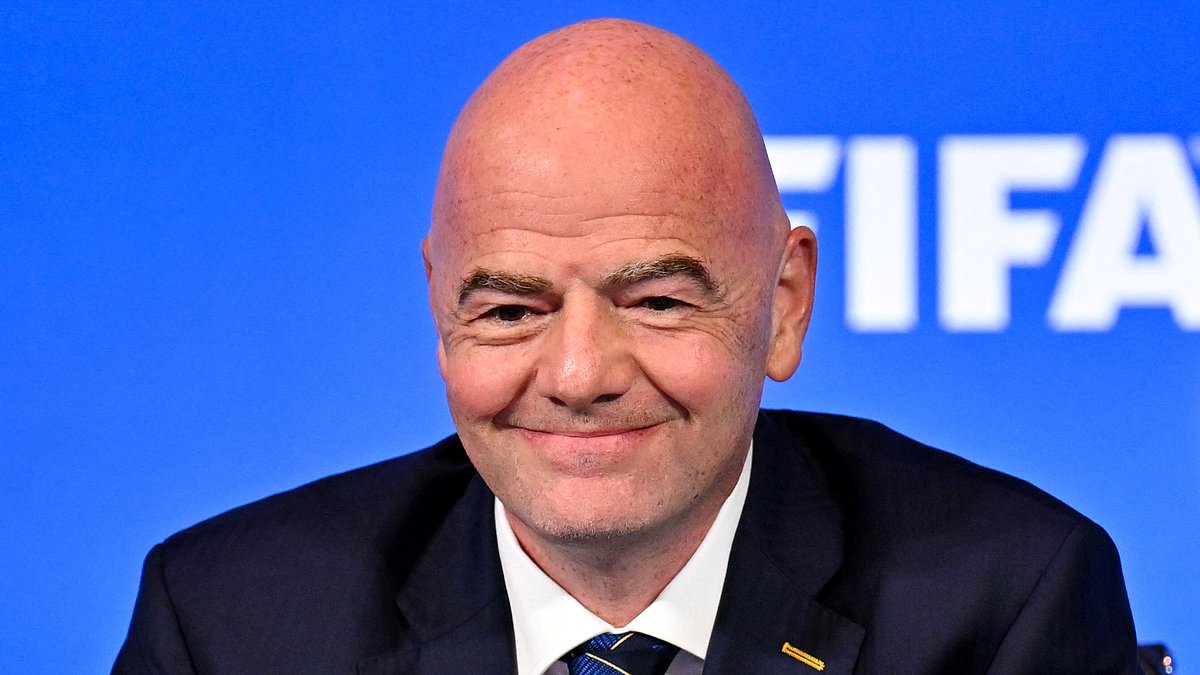
Not unlike many other aspects of world football, FIFA president Gianni Infantino, a 53-year-old Swiss lawyer, plays a pivotal role as chair of IFAB’s annual general meeting (AGM). Despite his position, Infantino is not a member of the board itself. However, his outsized influence was illustrated by a 57-minute diatribe against critics of Qatar, host of the 2022 World Cup, during which Infantino said, “Today I feel Qatari, today I feel Arabic, today I feel African, today I feel gay.” This statement was met with widespread mockery and derision.
FIFA has been represented by Fatma Samoura, who was appointed FIFA’s first female secretary general in June 2016, and was subsequently replaced by Mattias Grafstrom, a trusted consigliere of Infantino’s. Also present in the IFAB board is Arsène Wenger, the former manager of Arsenal, who serves as an expert advisor, as well as Pierluigi Collina, widely regarded as one of the greatest referees of all time, who serves as a representative of matchday officials.
In recent times, IFAB has emerged out of relative obscurity, largely due to its involvement in several key controversies, with the implementation of VAR, the much-maligned video assistant referee system, being the most notable. Many fans, particularly those of the Premier League, have blamed the system for slowing down games while awaiting lengthy decisions, which, contrary to its intentions, have resulted in highly contentious outcomes.
In response to these concerns, IFAB has convened a ‘protocol review group’, tasked with exploring potential modifications and improvements to the VAR system. Moreover, discussions are underway about expanding the scope of VAR to include free-kicks, corners, and second yellow cards, a prospect that raises concerns about further delays for spectators in the stadium.
Another ongoing controversy involves the laws regarding handballs, which IFAB has sought to clarify over the years, albeit with mixed results. Recent changes include advising that handball should not be called if the ball has deflected off another player’s body, as well as adopting a more lenient approach towards issuing yellow and red cards to players who unintentionally touch the ball.
IFAB’s focus in recent years has been directed towards improving player behavior, leading to the proposal of trialing ‘captain only zones’, where referees may designate specific areas of the field where only captains are allowed to approach them, and ‘cooling off periods’, where referees would temporarily send teams away to cool down following confrontations.
However, IFAB’s penchant for constantly modifying the rules has been met with frequent criticism, often accompanied by calls for the body to take a step back. One notable instance was IFAB’s decision to reject the trial of temporary substitutes who may have suffered a concussion, a decision that drew the ire of campaigners, including the Premier League, which expressed its bewilderment at the decision.
IFAB’s proposals to introduce blue cards were also met with a backlash. Under the proposed rules, players would be shown a blue card and temporarily removed for 10 minutes if they were guilty of committing a cynical foul, or if they showed dissent towards the referee. The proposal drew criticism from former England international Paul Merson, who argued that it would only exacerbate the current crisis of timewasting in football. He said, “They’re trying to copy rugby, they are very good at it, they’ve been working on it for a long time. But their sin bin is massive, you’re talking seven to ten points, the game opens up – it’s very rare you are not going to get majorly punished. In football, you just sit ten behind the ball and the game will be killed.”
Chris Sutton, another former England international, took to Twitter to mock football’s lawmakers in a sarcastic post. “Well done IFAB for complicating the game even more and prioritizing a blue card over the outdated head injury protocol which doesn’t put players first,” he wrote. “Football’s lawmakers are a joke.” This criticism appears to have been justified, as IFAB has since shelved its plans to introduce blue cards, at least for now.
In conclusion, the unassuming Zurich headquarters of the International Football Association Board (IFAB) conceals an organization that wields immense power in the football world, with its decision often sparking controversy and debate. The introduction of VAR, the proposal of blue cards, and the focus on improving player behavior are just a few examples of the many controversies that have cast IFAB under a brighter spotlight in recent years.
 Priyam Gera