
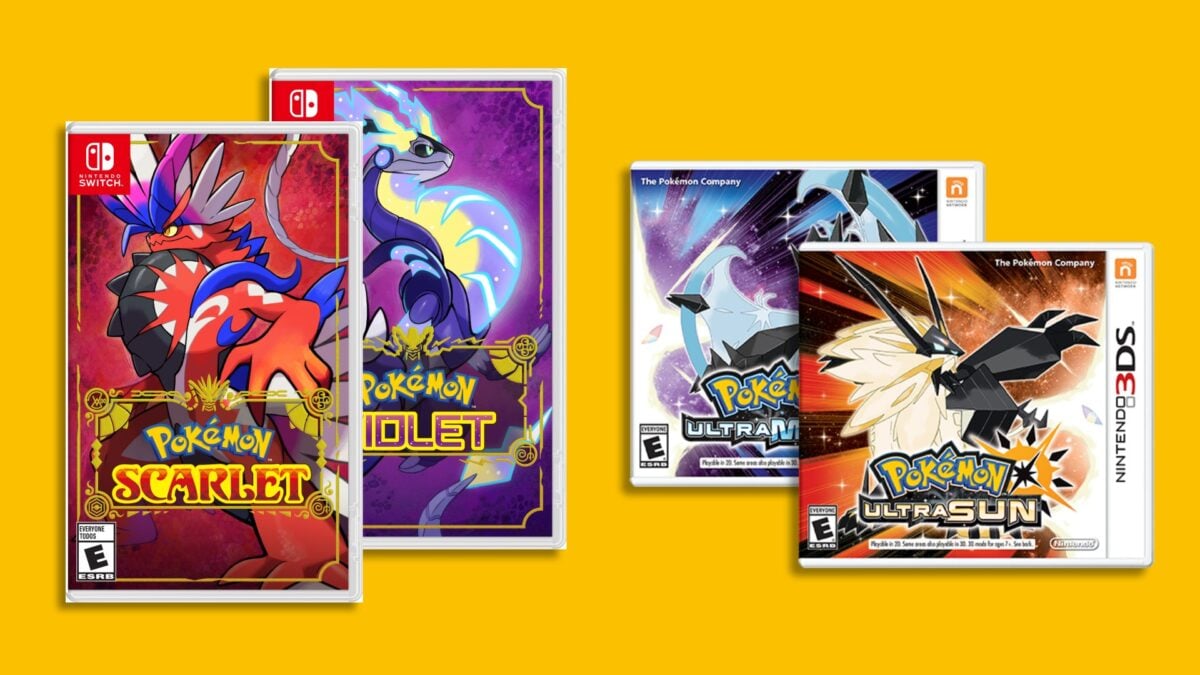
In today’s gaming landscape, it’s become a norm for blockbuster titles to launch in multiple editions, each boasting a plethora of additional in-game content. However, despite the varying price points, they fundamentally represent the same core experience. This has not been the case for the iconic Pokémon series, which first debuted in English back in 1998 with Pokémon Red and Pokémon Blue—each version offering subtle yet significant differences that resonate deeply with fans. Have you ever pondered why this unique strategy exists? The answer is both delightful and a touch whimsical.
The decision to create dual versions of a game, which essentially convey the same essence, is not an intuitive one. This approach can generate considerable confusion among new players who may be unsure which one is the latest release or if they might be making an error by choosing one over the other. For long-time fans, however, selecting the right version becomes an essential aspect of the gaming journey. Yet, given the potential for miscommunication and disconnection, one might expect that marketing executives would resist allowing such a strategy to flourish beyond the early planning stages. Nevertheless, the enduring success of the Pokémon franchise indicates that this model can indeed be effective.
So, what’s the reasoning behind it? As highlighted by GamesRadar through Genki_JPN’s insights on social media, Nintendo director Shigeru Miyamoto recently reflected on a conversation with Satoshi Tajiri, the visionary behind the Pokémon franchise. During a shareholder meeting, Miyamoto was asked about the possibility of any future titles surpassing Mario Kart 8 in sales. This prompted him to recount a humorous exchange with Tajiri regarding how Pokémon could ever hope to rival the mega-popularity of Mario. Using a machine translation, he shared, “A long time ago, Tajiri-san, the Pokémon director, joked with me that if you want to surpass Nintendo’s Mario, you’ll have to sell two copies of the game to each customer.”
This playful comment from Miyamoto encapsulates one of the reasons behind the creation of Pokémon Red and Green right from the start.
In Japan, these games initially made their debut in 1996 as Red and Green, with a later Blue version released within the same year.
It’s worth noting that despite the remarkable achievements in sales for Pokémon, it hasn’t consistently outperformed Mario. Indeed, traditional matchups show Mario emerging victorious on nearly every platform. The notable exceptions where Pokémon has triumphed are with Pokémon Gold and Silver on the Game Boy Color and Pokémon Ruby and Sapphire on the Game Boy Advance. On subsequent consoles such as the DS, 3DS, and Switch, Mario has retained its spot at the forefront. (Interestingly, there were no mainline Pokémon titles available on the Wii or Wii U.) However, this strategy has certainly not impeded Pokémon’s success, with titles like Sword and Shield selling 26.84 million copies and Scarlet and Violet achieving 27.15 million. In stark contrast, Mario Kart 8 has astonishingly sold 69.56 million copies, while Super Smash Bros. Ultimate and Super Mario Odyssey have reached 36.93 million and 29.84 million, respectively.
Ultimately, the dual-version concept remains a charming quirk of the Pokémon franchise, further deepening the engagement fans feel with each release while simultaneously keeping the excitement and intrigue alive in a highly competitive entertainment landscape.
 Priyam Gera