
In a surprising turn of events, Nintendo has released its first 3D platform game since The Legend of Zelda: Breath of the Wild, and it has achieved the remarkable feat of outselling that console generation’s headline title, Super Mario Odyssey. This latest entry has solidified Zelda’s position as the defining franchise for the Switch, diverging from long-standing expectations not only of the Zelda series but also of Nintendo’s core design philosophies.
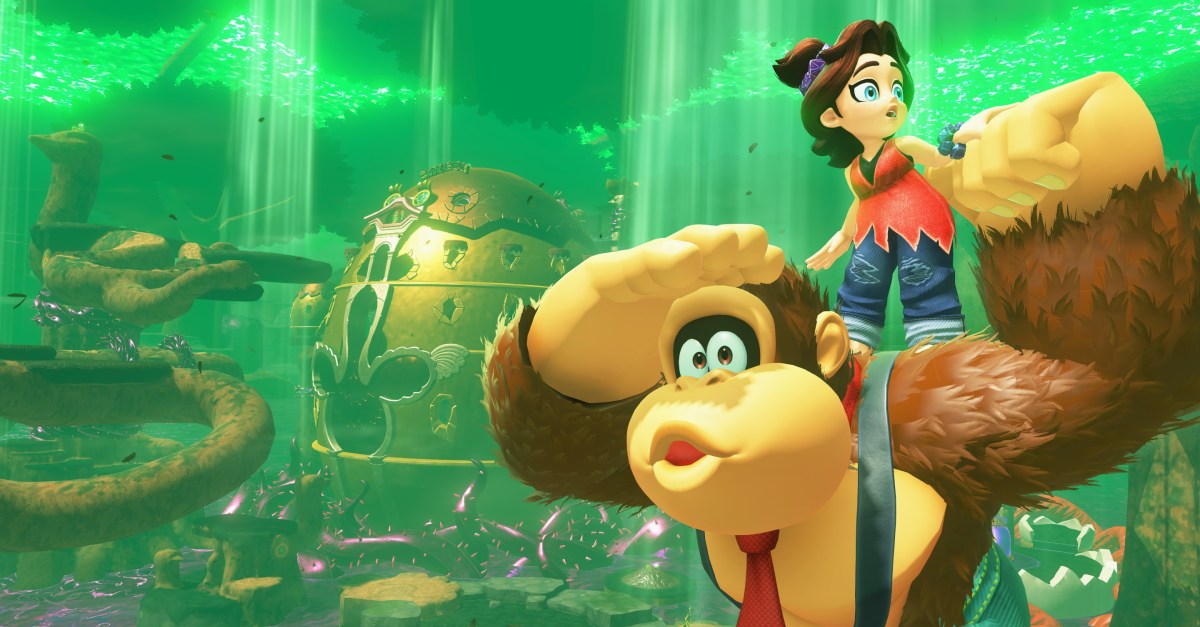
Titled Donkey Kong Bananza, this game emerges from the team that brought us Super Mario Odyssey, under the production guidance of director Kenta Motokura. Having spent a few hours with the game—navigating my way through its second primary area—it’s abundantly clear that the developers have embraced the challenges posed by the Zelda team, incorporating a range of innovative ideas. However, it’s essential to point out that they have done this while maintaining a distinctly different vibe from both Zelda and Mario; at its heart, this is truly a Donkey Kong title.
What’s particularly thrilling about Donkey Kong Bananza is how it highlights Nintendo’s commitment to character-centric gameplay. This marks the first in-house Donkey Kong game produced in Japan in two decades, leading to an exhilarating blend of destructiveness and charm. The lovable ape bulldozes through the game world, breaking down barriers and uprooting landscapes. Every aspect of this game embodies DK’s brute strength and endearing, straightforward personality, from one-liner dialogue options to the satisfying crunch of shattered menu buttons when selected. The result is a vibrant and chaotic experience from Nintendo—unapologetically bold and delightfully silly.
However, Bananza is far from lacking sophistication amidst its wanton destruction. This shift signifies a broader evolution in Nintendo’s philosophy. In the post-Breath of the Wild era, the company has become more adventurous with complexity. Donkey Kong boasts an extensive moveset, characterized by a detailed control scheme that may require some initial acclimatization. Though Bananza introduces these moves gradually, players have access to the entire repertoire from the start.
This principle echoes a significant aspect of both Breath of the Wild and its sequel, Tears of the Kingdom: a commitment to providing players with all necessary tools right off the bat. It places a high value on player freedom, encouraging creativity and problem-solving even within the typically structured realms of Nintendo design. Bananza embraces this notion, allowing players the freedom to climb nearly any surface—an audacious twist for a platformer. DK’s powerful abilities also offer a wealth of choices in exploration and secret discovery. However, within the primary quest’s mechanics, these abilities seem more focused on delivering impact rather than facilitating player-directed solutions—at least from my limited gameplay thus far. Interactions like switches, structures, and materials seem to be designed with specific moves in mind, akin to finely-tuned locks and keys.
Yet, Bananza hasn’t completely abandoned traditional platforming structures. Transformations in the game are still acquired through unlocks, such as the powerful Kong Bananza gained at the conclusion of the first major area, Lagoon Layer. The game’s world is divided into Layers that players navigate downward toward the planet’s core. While these Layers are expansive, they are also compact and resemble Odyssey’s unique pocket dimensions more than Zelda’s vast interconnected landscapes, despite their dreamy, organic, pastel hues inspired by Hyrule’s latest iteration.
Throughout my playthrough, I noticed subtle nods to the last two Zelda titles; Donkey Kong sports a heart meter that can be temporarily extended with additional yellow hearts after satisfactory rests. There is a collection of outfits that grant stat enhancements, echoing Link’s wardrobe. In a thrilling twist, DK can skydive between Layers and ride on boulders like Link on his shield. To my surprise, I even encountered a skill tree—something Nintendo usually shies away from—where players earn skill points for collecting five of the game’s colossal crystal bananas. Getting a gameplay incentive for collecting bananas—akin to Super Mario Odyssey’s Power Moons—is a rewarding touch, but the infectious jingle accompanied by a booming “Oh, Banana!” every time you snag one is perhaps the most delightful reward of all.
In Donkey Kong Bananza, one can perceive three distinct Nintendos vying for attention, occasionally clashing, yet also coming together in harmony. The first embodies the classic Nintendo from every 3D Mario experience, where players delight in well-crafted worlds filled with clever secrets, whimsical slapstick, and challenging puzzles. The second represents the new direction championed by Breath of the Wild and Tears of the Kingdom—a Nintendo that invites player freedom and showcases bold programming alongside meticulous design, even if it means sacrificing a bit of framerate consistency.
 Priyam Gera